DOT Testing After a Violation
What Is a Return-to-Duty Test?
Learn when the Return-to-Duty test occurs, what result is required, and why it must be completed before returning to DOT safety-sensitive duties.
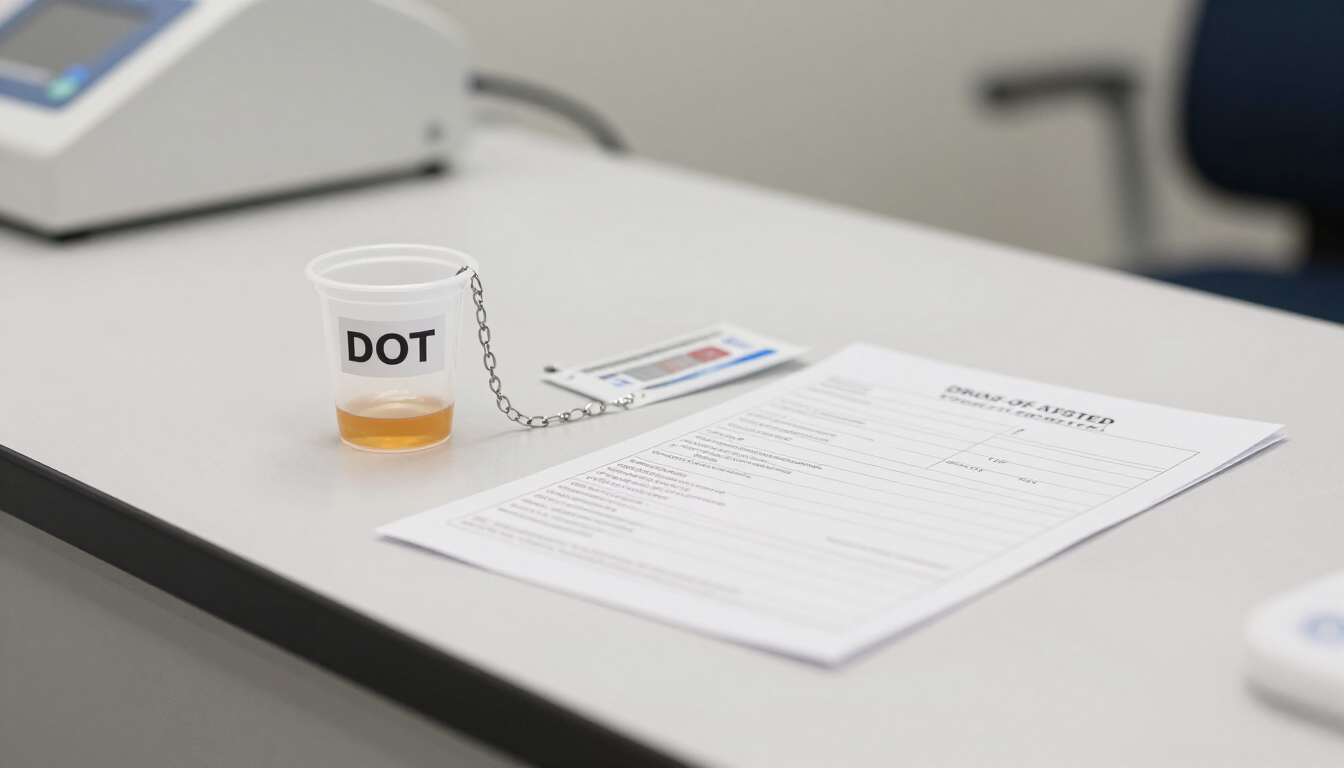
The Return-to-Duty test is a specific drug and/or alcohol test that a safety-sensitive employee must take, with a negative result, before returning to safety-sensitive duties after a DOT violation. It is a required step under 49 CFR Part 40 and is separate from the SAP evaluation, the recommended education or treatment, and the follow-up testing plan. This article explains what the Return-to-Duty test is, when it occurs, and what it does, and does not, establish.
When the Return-to-Duty test happens
The Return-to-Duty test occurs near the end of the Return-to-Duty process. Before it can be given, the employee must complete the education and/or treatment recommended by the Substance Abuse Professional (SAP), return to the SAP for a follow-up evaluation, and have the SAP determine that the employee has successfully complied with the recommendation. Only after the SAP determines successful compliance may the Return-to-Duty test be arranged.
It is a single test with a required negative result
The Return-to-Duty test is a single test. The employee must have a negative result on this test before performing safety-sensitive functions again. A positive result or a refusal on the Return-to-Duty test means the employee may not return to safety-sensitive duties and would re-enter the SAP process, beginning again with an evaluation.
Who arranges the test
The Return-to-Duty test is arranged by the employer (or, where applicable, the employer's consortium/third-party administrator). The SAP does not arrange or conduct the testing. The SAP's role is to evaluate the employee, recommend education or treatment, determine successful compliance at the follow-up evaluation, and establish the follow-up testing plan. The testing itself is handled separately.
How the Return-to-Duty test differs from follow-up testing
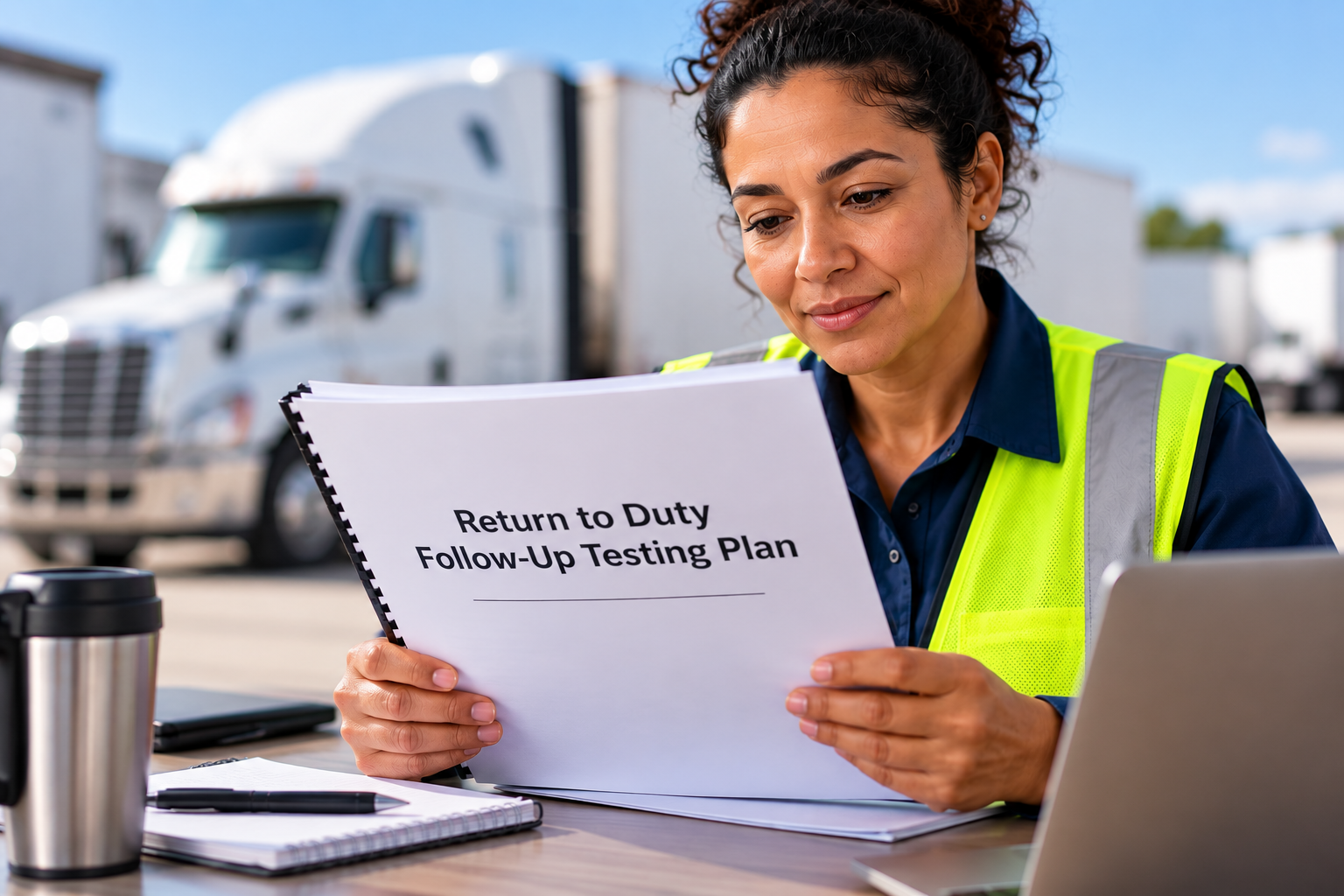
The Return-to-Duty test is a one-time test that must be passed before the employee returns to duty. The follow-up testing plan is separate. It is established by the SAP, begins after the employee returns to duty, and consists of unannounced tests that continue over a defined period. The two should not be confused: the Return-to-Duty test is the gateway back to duty, while follow-up testing monitors the employee after the return.
What the Return-to-Duty test does not guarantee
A negative Return-to-Duty test is required to return to safety-sensitive duties, but it does not by itself guarantee a return to work. The employer decides whether to proceed with the Return-to-Duty test and whether to return the employee to a safety-sensitive position. Completing the SAP process and passing the Return-to-Duty test does not require the employer to return the employee to duty.
Sources
Regulatory statements in this article are based on current, publicly available U.S. DOT and FMCSA sources. Links open the official references in a new tab.
Educational disclaimer: This article provides general information about the DOT Return-to-Duty process for safety-sensitive employees. It is not legal, medical, or case-specific advice and does not replace individualized guidance from a qualified Substance Abuse Professional (SAP). Your specific requirements depend on your violation, your employer, and the DOT agency rules that apply to you.
Ready to take the next step?
- Select “START YOUR EVALUATION.”
- Choose your appointment and pay securely.
- Complete your intake online.
- Meet with your Willow Bend SAP to learn your next steps.