FMCSA Clearinghouse & Employment
What Information Is Reported to the Clearinghouse?
Learn what drug and alcohol violations and Return-to-Duty milestones may be reported, who reports the information, and what the Clearinghouse record is used for.
The FMCSA Drug & Alcohol Clearinghouse records specific types of information about drug and alcohol program violations and the Return-to-Duty process for CDL and CLP drivers. This article explains what is reported, who is responsible for reporting it, and what the Clearinghouse does not record.
Violations that are reported
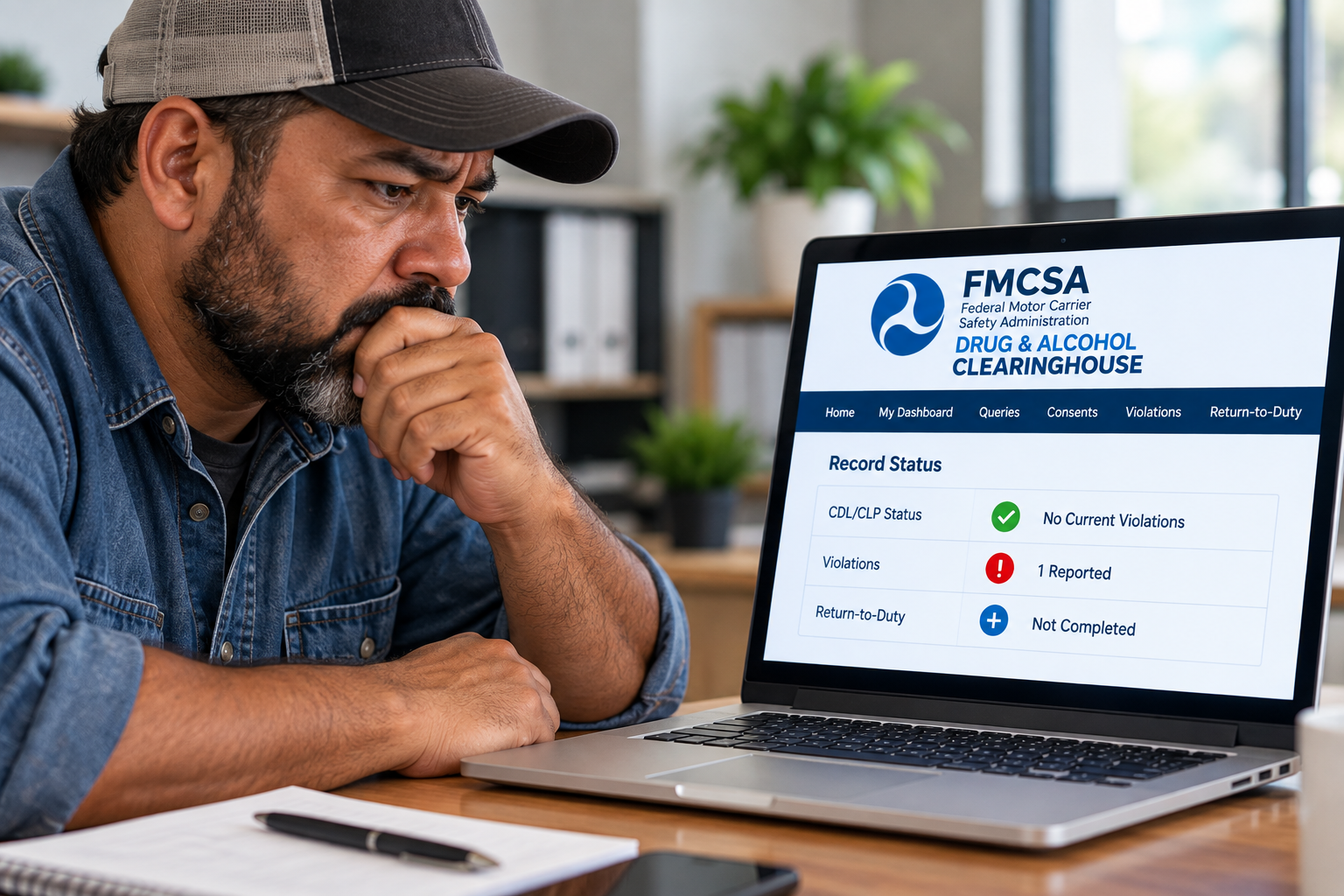
The Clearinghouse records drug and alcohol program violations, including a verified positive drug test result, an alcohol test result of 0.04 or greater, and a refusal to test. Under DOT rules, a refusal to test is treated as a violation and is reported the same as a positive result. These are the same violations that trigger the Return-to-Duty process under 49 CFR Part 40.
Return-to-Duty milestones that are reported
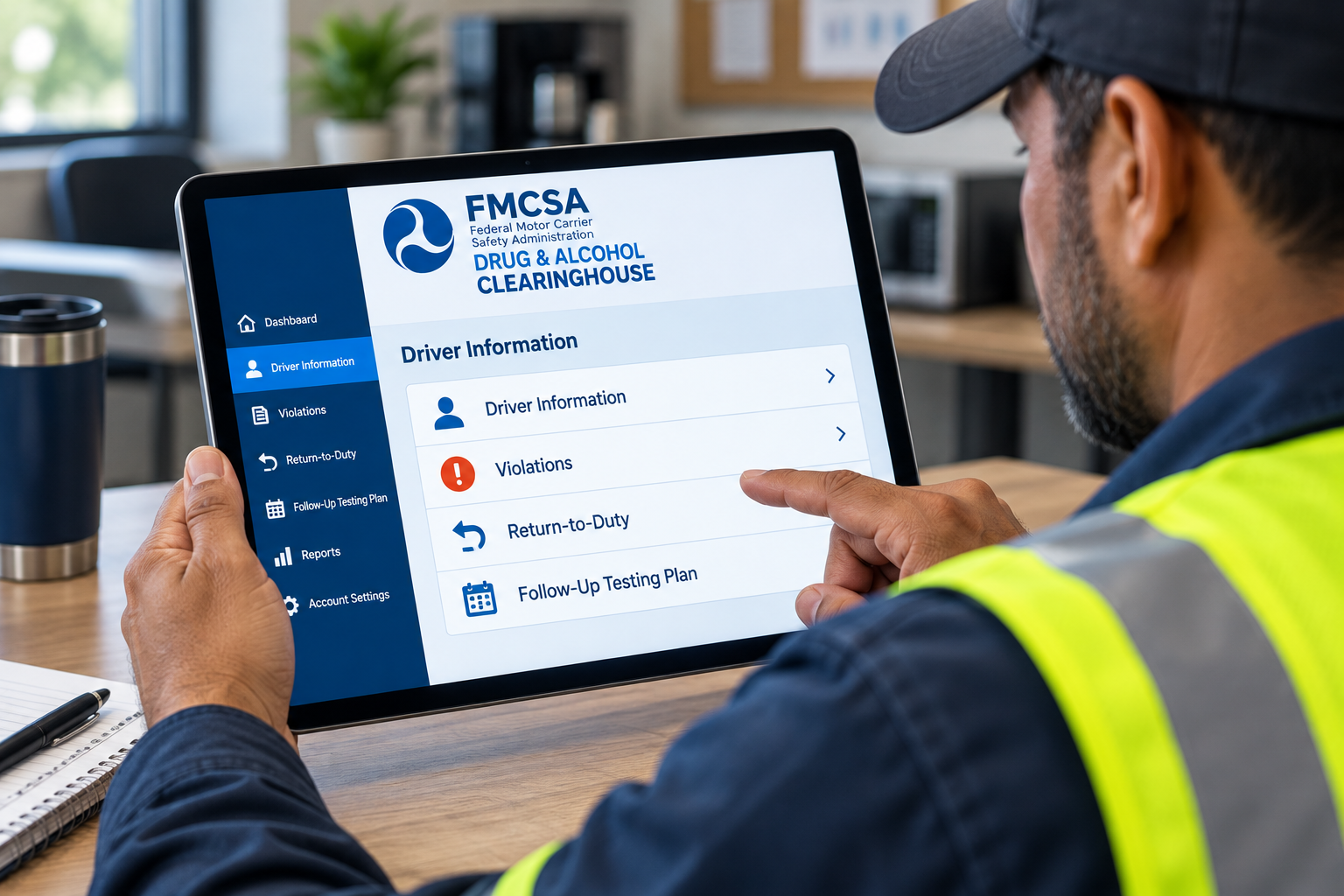
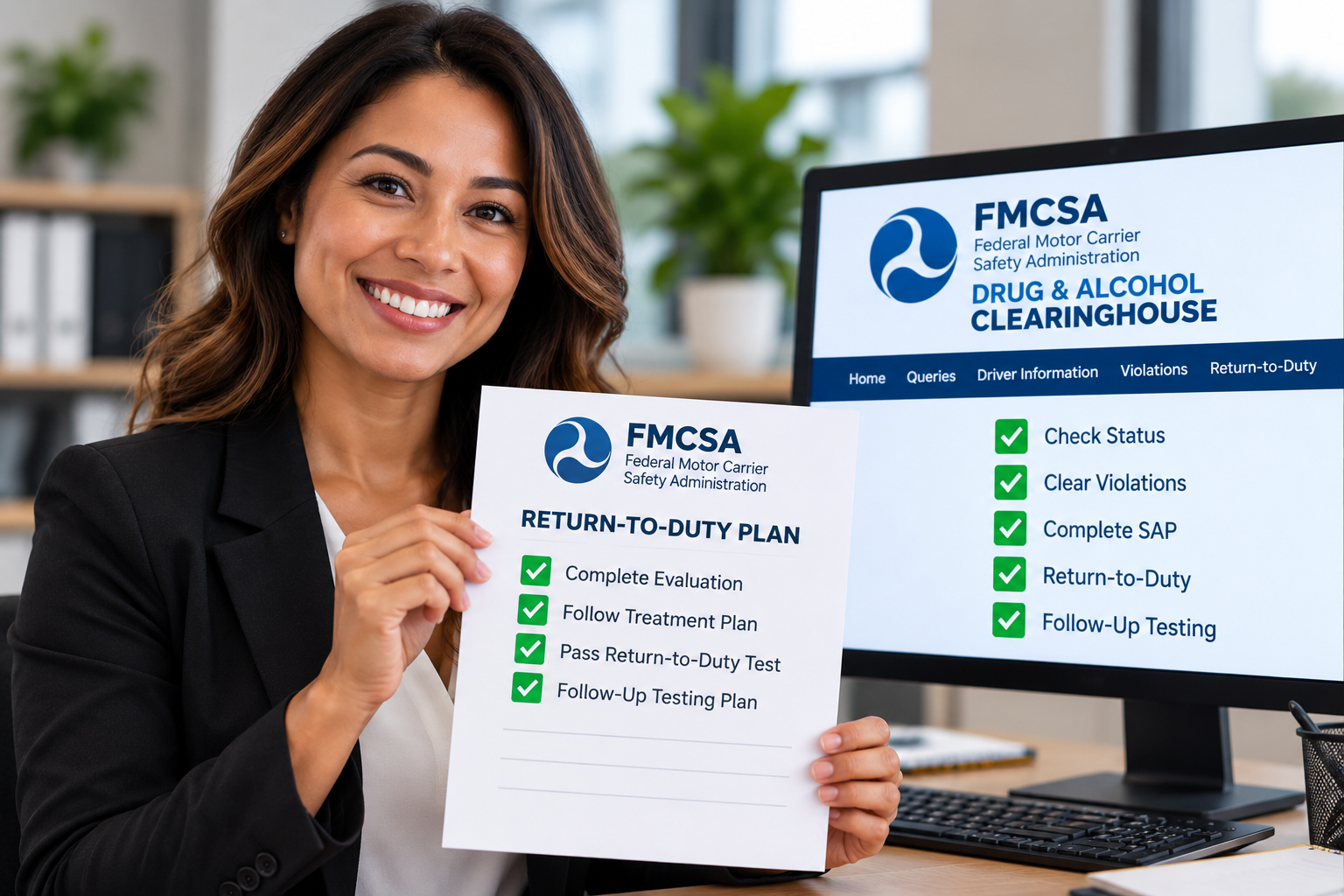
In addition to the violation itself, the Clearinghouse records key Return-to-Duty milestones. These include the completion of the SAP evaluation, the SAP's report that the employee has successfully complied with the recommendation, and a negative Return-to-Duty test result. Recording these milestones allows employers to see whether a driver has completed the required steps before returning to safety-sensitive duties.
Who reports the information
Different parties are responsible for reporting different pieces of information. Employers and their consortiums or third-party administrators (C/TPAs) report violations such as positive test results and refusals, as well as the negative Return-to-Duty test result. The Substance Abuse Professional (SAP) reports information related to the evaluation, such as the completion of the initial evaluation and the determination of successful compliance. The specific reporting responsibilities are defined by FMCSA Clearinghouse requirements.
What is not reported
The Clearinghouse records violations and Return-to-Duty milestones, not the underlying clinical details of the SAP evaluation or the specifics of any education or treatment. The SAP's recommendation and the content of any education or treatment are not part of the Clearinghouse record. The database is focused on the regulatory milestones required to determine a driver's eligibility to perform safety-sensitive functions.
How long information remains
Information recorded in the Clearinghouse remains there for a defined period. A violation generally remains on a driver's record until the driver completes the Return-to-Duty process and the required time has passed, after which the record may be removed. The exact retention rules are set by FMCSA. Drivers can view their own records through their Clearinghouse account to see what has been reported.
Reporting does not determine employment
The information in the Clearinghouse is used by employers to determine whether a driver is eligible to perform safety-sensitive functions. The fact that a violation or milestone is reported does not by itself determine whether a driver is hired or returned to duty. The employer makes that decision separately, based on the driver's record and the employer's own policies.
Sources
Regulatory statements in this article are based on current, publicly available U.S. DOT and FMCSA sources. Links open the official references in a new tab.
Educational disclaimer: This article provides general information about the DOT Return-to-Duty process for safety-sensitive employees. It is not legal, medical, or case-specific advice and does not replace individualized guidance from a qualified Substance Abuse Professional (SAP). Your specific requirements depend on your violation, your employer, and the DOT agency rules that apply to you.
Ready to take the next step?
- Select “START YOUR EVALUATION.”
- Choose your appointment and pay securely.
- Complete your intake online.
- Meet with your Willow Bend SAP to learn your next steps.